The copyright of this article belongs to Siansonic Technology.The production is prohibited without permission.
The "Hidden Driver" of High-Precision Micro-Electroforming
In the field of modern micro-nano manufacturing, as electronic components move toward miniaturization, high density, and high precision, the micro-electroforming process faces an unavoidable technical challenge: how to achieve uniform and dense metal deposition within complex microstructures? The answer may lie in a kind of "inaudible sound" — megasonic cleaning technology.
What Are Megasonic Waves?
Megasonic waves refer to high-frequency ultrasonic waves at the megahertz (MHz) level. Unlike the ordinary ultrasonic waves we are familiar with for cleaning jewelry or medical devices (typically 20–100 kHz), megasonic waves have frequencies tens to hundreds of times higher. This high-frequency characteristic brings two advantages:
01 Low Cavitation Effect
Ordinary ultrasonic waves produce violent cavitation bubble collapse in liquid, which can easily damage microstructures. However, the megasonic waves used in megasonic cleaning technology have a weak cavitation effect and do not cause impact damage to the workpiece surface.
02 Strong Acoustic Streaming Disturbance
Megasonic waves can induce stable acoustic streaming in liquid. This micro-scale fluid disturbance can penetrate deep into micro-nano structures and promote the mass transfer efficiency of the solution.
It is precisely these characteristics that give megasonic cleaning technology its unique value in precision processing fields such as micro-electroforming, cleaning, and etching.

The "Pain Points" of Micro-Electroforming
Micro-electroforming is a processing technology that uses the principle of electrochemical deposition to replicate microstructures within molds. It is widely used in the manufacturing of MEMS (micro-electro-mechanical systems), micro-molds, high-precision connectors, and other fields.
However, in actual production, micro-electroforming faces a long-standing problem: uneven thickness of the electroformed layer. Especially on large-area cathode plates, the deposition speed differs significantly between the edges and the center, easily forming a "saddle-shaped" distribution. Worse, if the ions in the solution are not replenished in time, deposition within deep holes of microstructures will be obstructed, leading to defects in the electroformed layer.
Traditional methods such as mechanical stirring and circulation pumps can improve solution flow at the macro scale, but they are inadequate in microstructures. The emergence of megasonic cleaning technology precisely fills this gap.
How Do Megasonic Waves Regulate Electrodeposition?
Relevant academic research on megasonic-assisted micro-electroforming has designed a bidirectional patch-type megasonic reactor, which was integrated into precision electroforming equipment. By alternately applying megasonic waves on both sides of the electroforming tank, they achieved regulation of the electrodeposition process.
Experimental Results Demonstrate
Without megasonic application, the flatness (PV value) of the nickel electroformed layer was 15.03 μm;
Under single-side megasonic application, the flatness was slightly worse at 15.36 μm, with obvious standing wave fringes and pinhole defects appearing on the surface;
Under bilateral alternating megasonic application, the flatness improved to 10.91 μm, with a more uniform and dense surface morphology and fewer defects. The above are laboratory standard operating condition test data; actual results vary depending on the structure.

Why Is Bilateral Megasonic Application More Effective?
The key lies in the disruption of "standing waves." Single-side megasonic application forms a stable standing wave field in the tank, where bubbles accumulate in the antinode regions and deposition is uneven. Bilateral alternating application continuously disturbs the sound field, breaks the steady state, causes bubbles to detach, and makes ion distribution more uniform, thereby achieving a more ideal electroforming effect.
The Path to Industrial Implementation of Megasonic Technology
Breakthroughs in theoretical research ultimately need to be translated into mass-producible and replicable industrial equipment. In this process, the design of the megasonic reactor is particularly critical.
Traditional immersion-type megasonic cleaning tanks are simple but have problems such as uneven sound fields and poor stability. The patch-type design, in which piezoelectric ceramics are directly attached to the outer wall of the tank and sound waves are transmitted through the tank wall, not only avoids corrosion of the transducer by the corrosive electroforming solution but also achieves a more uniform sound field distribution.
Building on this, Siansonic further optimized the design and manufacturing of megasonic vibrator plates, launching a series of megasonic vibrator plate products suitable for tank-type megasonic cleaning and electroforming processes.
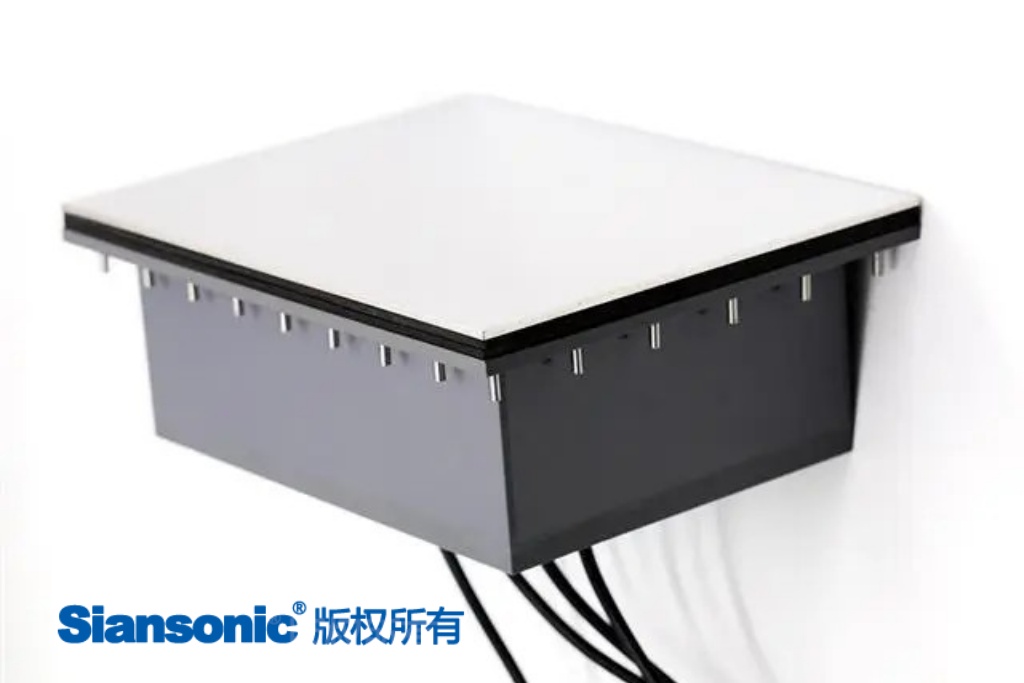
Figure 1. Siansonic's megasonic cleaning plate
Siansonic's batch type megasonic cleaning plates adopt a technical approach of precise coupling between piezoelectric transducers and quartz or sapphire oscillation layers, with the following core advantages:
01 Sound Field Distribution
Through reasonable arrangement of multiple ceramic arrays, megasonic energy is uniformly covered within the tank, avoiding locally too strong or too weak areas.
02 Cavitation Effect
Protects microstructures from damage, suitable for wet processing of high-precision devices.
03 Highly Corrosion-Resistant Materials
The tank body can be made of quartz or all-non-metal materials, adapting to strong acid, strong alkali, and organic solvent environments.
04 No Risk of Contaminant Shedding
The matching layer material is stable and reliable, greatly reducing the risk of secondary contamination caused by contaminant shedding.
05 High-Power Output
The sound intensity on the megasonic plate surface can reach over 5 W/cm², adapting to high-efficiency deposition and cleaning requirements.
06 Digital Drive Technology
The megasonic generator is fully digital, supporting high frequency, high power, and precise regulation.
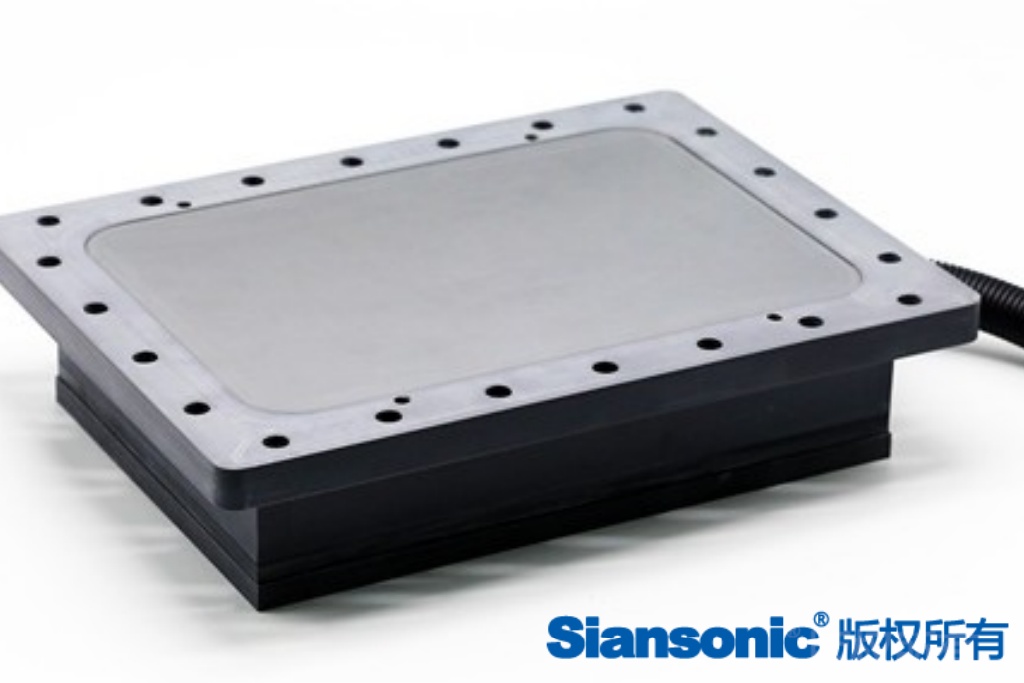
Figure 2. The megasonic plate of Siansonic
Siansonic has been deeply engaged in megasonic technology for many years, committed to transforming ideal laboratory results into reliable tools for industrial production. Whether for precision electroforming or high-cleanliness cleaning, megasonic cleaning technology safeguards every wafer and every microstructure.
If you are also looking for a solution that improves layer uniformity and reduces the probability of microstructure damage in precision micro-nano processing scenarios, welcome to explore the broad application space and rich application possibilities of megasonic cleaning technology with us.


