The copyright of this article belongs to Siansonic Technology.The production is prohibited without permission.
The essence of ultrasonic lysis is not simple mechanical vibration. Instead, it leverages powerful physical effects induced by ultrasonic waves in liquid media to achieve deep-reaching and efficient homogeneous mixing.
Its core mechanism lies in the "cavitation effect". When high-frequency ultrasonic waves propagate in sample solutions, they form alternating dense and sparse sound waves that compress and stretch liquid molecules. During the negative-pressure phase, countless tiny vacuum bubbles (cavitation bubbles) are "torn open" inside the liquid. In the subsequent positive-pressure phase, these cavitation bubbles instantly collapse in an almost explosive manner.
This instantaneous collapse generates transient local high temperature, high pressure, intense shock waves and high-speed micro-jets on a microscopic scale. This concentrated energy can fully break up particle agglomerates in samples and overcome resistance between liquid layers, realizing rapid and thorough mixing and homogenization at the molecular level. Compared with traditional stirring methods, ultrasonic lysis delivers superior mixing efficiency and uniformity.
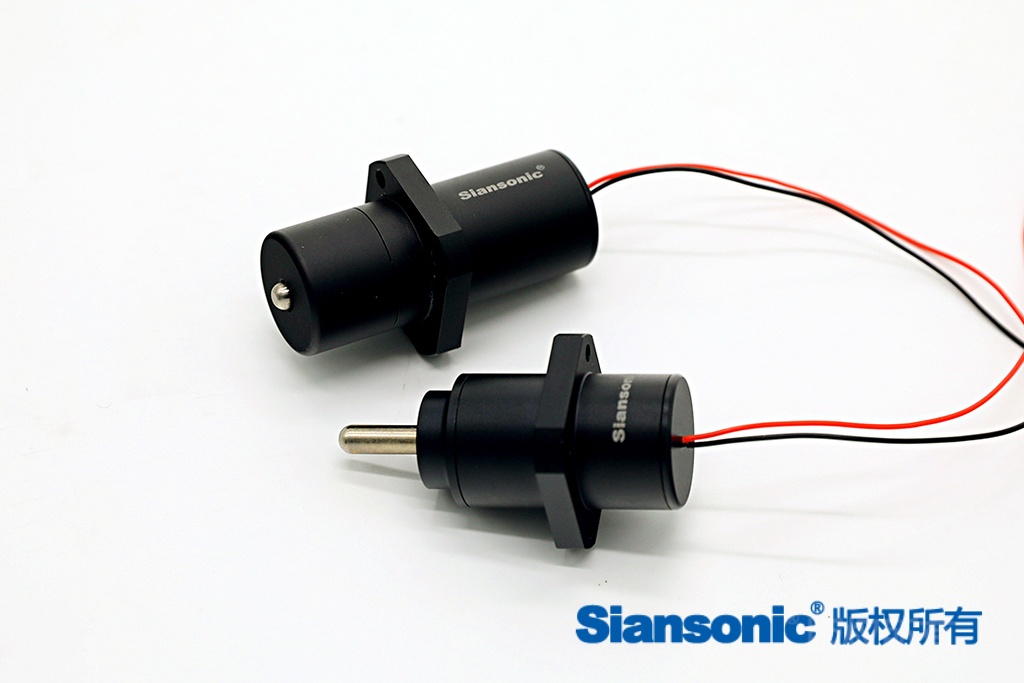
Figure 1. Siansonic's sonication transducer for ultrasonic lysis in IVD applications
Core Technical Advantages
Compared with traditional methods such as stirring and shaking, ultrasonic lysis brings significant improvements:
01 Fast Mixing Speed for Higher Throughput
Driven by sufficient energy from high-frequency vibration and cavitation effect, ultrasonic lysis completes sample processing within a short time. It is especially suitable for high-throughput laboratories, greatly shortening sample pre-processing time and boosting working efficiency.
02 Thorough Homogenization for Reliable Results
Cavitation effect takes place throughout the entire liquid medium with evenly distributed energy, ensuring highly homogeneous mixing of all sample components at the microscopic level. It is particularly critical for precision experiments with strict requirements on sample uniformity, such as gene sequencing and proteomics, and guarantees accuracy and repeatability of experimental data.
03 Wide Applicability for Diverse Samples
Ultrasonic lysis features broad compatibility. It performs outstanding mixing and dispersion for aqueous solutions, oily liquids, suspensions, and complex samples containing solid particles. One single unit can address multiple experimental challenges.

Key Application Fields
In medical diagnostics, processors built around ultrasonic lysis enable thorough mixing of cell debris, proteins, nucleic acids and other components in biological samples (e.g. blood, tissue homogenate). It provides well-homogenized samples for subsequent detection and analysis and serves as a vital link in diagnostic workflows.
Furthermore, ultrasonic lysis is widely adopted in biopharmaceuticals, nanomaterial synthesis, food industry, environmental monitoring and many other sectors. It has become a versatile and essential processing tool for scientific research, industrial manufacturing and quality control.
In summary, the sonication transducer based on ultrasonic lysis delivers powerful, homogeneous and versatile mixing solutions centered on its unique cavitation effect. As the technology keeps evolving, it will keep advancing sample-processing workflows across industries and provide strong impetus for scientific discovery and industrial upgrading.


