The copyright of this article belongs to Siansonic Technology.The production is prohibited without permission.
PVDF (polyvinylidene fluoride) is an outstanding organic piezoelectric material with unique flexibility, low density, and lead-free environmental properties, playing an important role in emerging flexible electronics and smart systems. Research shows that through polymer chain structure design and fabrication process control, PVDF and its copolymers (such as P(VDF-TrFE)) are not only widely used in traditional fields such as sensors, energy harvesters, and actuators, but also show broad application potential in cutting-edge nanoelectronic devices including non-volatile memory, photodetectors, transistors, and embedded capacitors. Therefore, developing a thin film fabrication process that balances uniformity, controllability, and scalable production has become the key to advancing its industrial application.
Bottlenecks and Challenges of Traditional Fabrication Methods
Common PVDF thin film fabrication methods currently include:
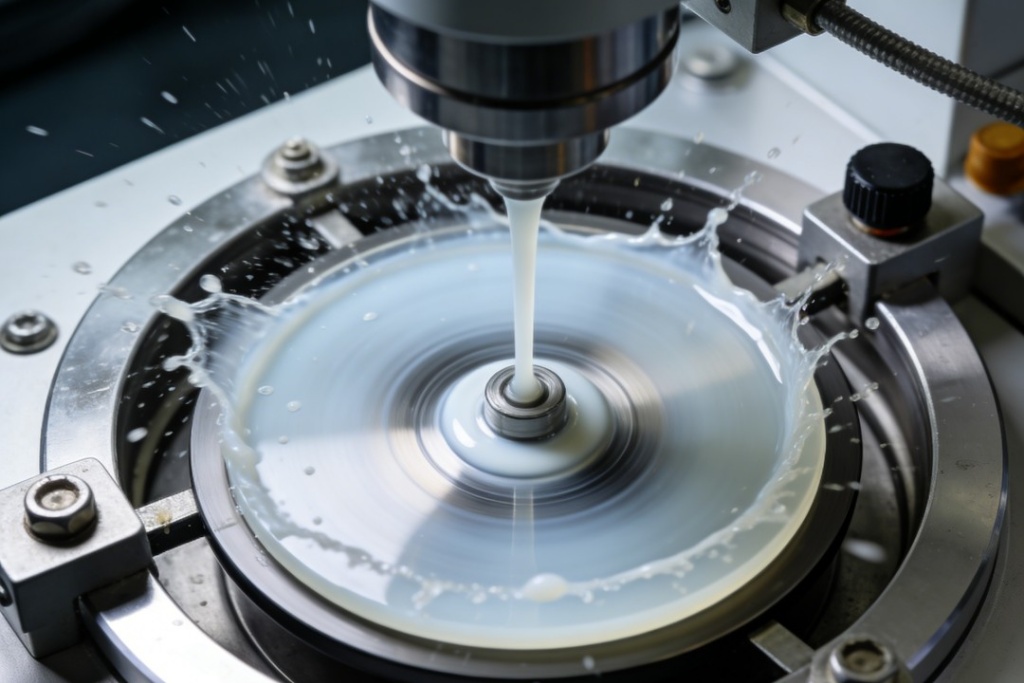
1. Tape casting and spin coating
These processes are simple, but the resulting films typically require subsequent stretching, poling, or high-temperature quenching to induce the piezoelectric phase. The process is cumbersome and difficult to achieve uniform treatment over large areas, limiting scalable production.
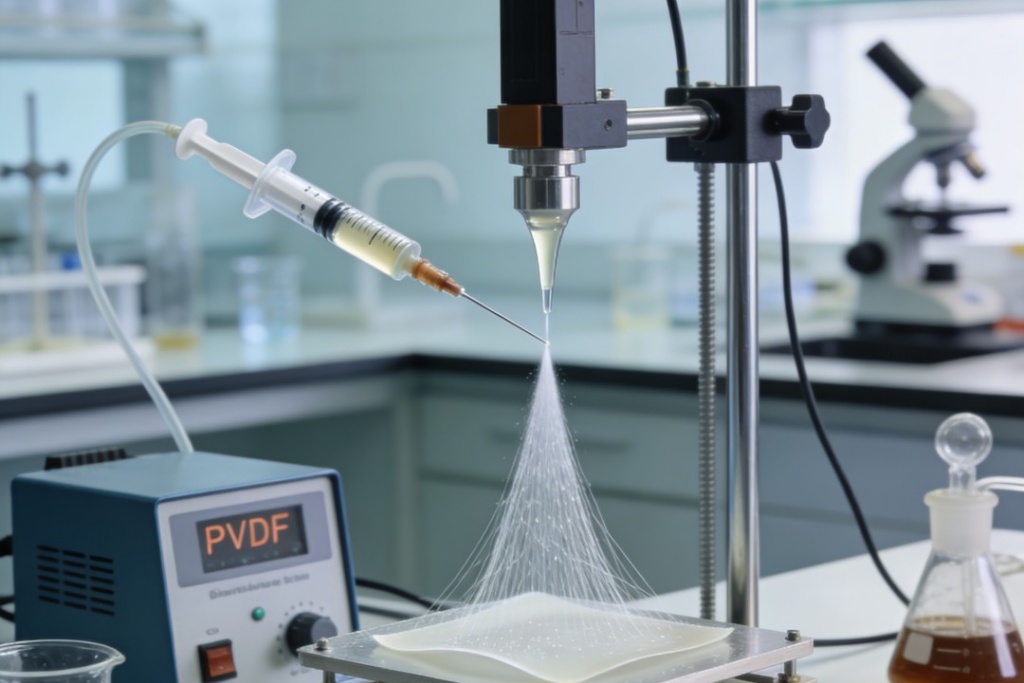
2. Electrospinning
Although self-poling can be achieved, the film structure is mostly a porous fiber network with in-plane oriented poling and high surface roughness, limiting its reliability in precision microelectronic devices.
These methods’ shortcomings in film uniformity, poling efficiency, and process integration call for a new fabrication technology with greater controllability and adaptability.
A New Path for High-Quality, Uniform Thin Film Fabrication
Ultrasonic spraying technology uses high-frequency acoustic vibration to convert liquid into uniform micron-sized droplets, achieving a precise and controllable deposition process that is particularly suitable for functional polymer thin film fabrication. Its significant advantages in PVDF thin film fabrication include:
1. Simplified process, stable and efficient
Reduces post-processing steps, improving fabrication efficiency and film consistency.
2. High film quality
Ultrasonic atomization produces fine and uniform droplets, forming dense films with low roughness and low porosity, which enhances device performance and stability.
3. Strong adaptability for complex applications
Can be sprayed onto various substrates (flexible, rigid, curved), suitable for complex structures and patterned device development, enabling manufacturing possibilities for flexible electronics and customized devices.
4. Easy adaptation to scalable mass production
Low equipment cost, fast spray speed, and excellent uniformity, with smooth transition potential from lab-scale samples to large-area continuous production.
Outlook for Ultrasonic Spraying Technology
With the development of flexible electronics, IoT, and wearable technology, demand for high-performance, lightweight, environmentally friendly piezoelectric materials is growing. As a controllable and process-compatible thin film fabrication method, ultrasonic spraying technology is not only suitable for PVDF but can also be extended to other functional polymer composite systems, expected to play a role in energy harvesting, sensing, storage, display, and many other devices.
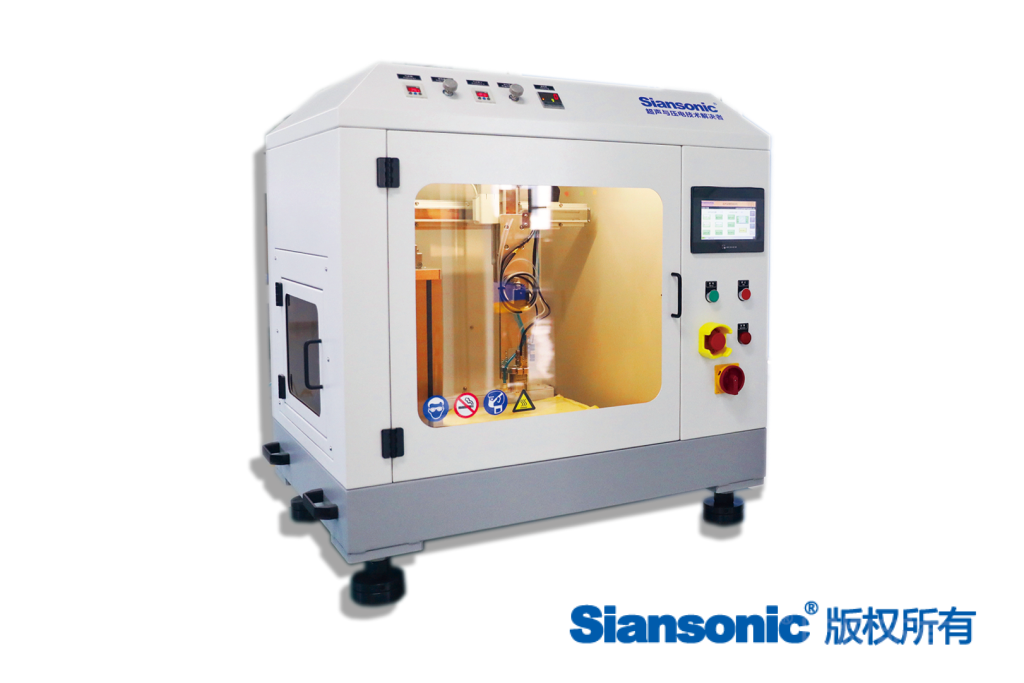
Figure 1. Siansonic's benchtop ultrasonic spray system
About Siansonic Technology
Siansonic Technology has been deeply engaged in piezoelectric ceramic technology and the R&D and manufacturing of ultrasonic spraying systems based on ultrasonic spraying technology since 1986. Leveraging integrated materials-equipment-process capabilities, the company provides customers with one-stop solutions ranging from thin film structure design and process optimization to mass-production spraying. We are committed to advancing the innovative application of ultrasonic spraying technology in polymer thin film fabrication, supporting both research and industry in translating materials into devices.


