The copyright of this article belongs to Siansonic Technology.The production is prohibited without permission.
Nanomaterials are special materials composed of crystalline or amorphous ultrafine particles at the nanoscale (1–100 nm) as basic structural units. Featuring a large specific surface area, small particle size, and a high proportion of surface atoms, they exhibit unique electronic motion states, surface effects, macroscopic quantum tunneling effects, and quantum size effects, which in turn give them distinctive physicochemical properties. These characteristics have led to their widespread application in high-end fields such as biomedicine, environmental protection, and aerospace. Carbon nanotubes, metal oxides, and nanoclays are typical representatives of high-performance nanomaterials.
However, the metastable structure of nanomaterials presents a core challenge in coating applications: when formulated into sprayable solutions, they are highly prone to caking or agglomeration due to interparticle forces. Such agglomeration severely undermines the uniformity and performance of coatings. Traditional coating technologies struggle to fundamentally resolve this issue, hindering the large-scale coating application of nanomaterials.
Core Principle
Ultrasonic coating technology is a coating process based on ultrasonic energy. Its core principle utilizes high-frequency ultrasonic oscillation (typically above 20 kHz) to efficiently atomize the liquid to be sprayed, while a low-pressure gas flow guides the atomized droplets to achieve precise coating. Unlike traditional two-fluid spraying, which relies on high-pressure airflow for atomization, the atomization process of ultrasonic coating technology does not depend on excessive flow rates or air pressure. This unique working mechanism gives ultrasonic coating technology distinctive advantages in nanomaterial coating.
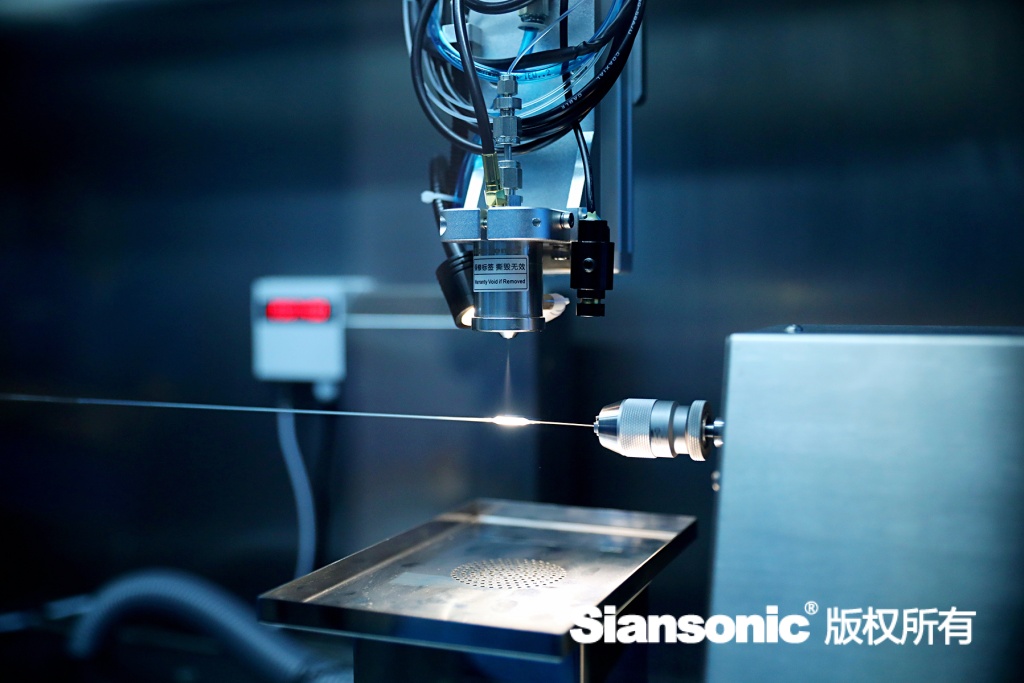
Figure 1.Balloon catheter ultrasonic nozzle based on ultrasonic technology
Core Advantages
1. Highly Effective Suppression of Nanoparticle Agglomeration, Ensuring Dispersion
Leveraging ultrasonic technology, ultrasonic coating technology generates high-frequency ultrasonic vibrations during operation that act directly on agglomerated particles in nanomaterial solutions. The vibrational energy breaks interparticle forces, achieving uniform dispersion of nanoparticles. This key advantage is difficult to achieve with traditional two-fluid spraying technology, ensuring the performance stability of nanocoatings from the source.
2. Precise and Controllable, Adaptable to Diverse Requirements
The atomized particle size of ultrasonic coating technology is primarily determined by the ultrasonic frequency corresponding to the ultrasonic technology. By adjusting the frequency, the size of atomized droplets can be precisely controlled (typically achieving micron to submicron atomization), allowing flexible adaptation to the coating requirements of different nanomaterials. Additionally, since the atomization process does not require high-pressure airflow, the spray flow rate of ultrasonic coating technology can be controlled with high precision, further improving coating uniformity.
3. Excellent Coating Quality, Effective Cost Reduction and Efficiency Improvement
With precise atomization control and dispersion capability, nanocoatings formed by ultrasonic coating technology based on ultrasonic technology exhibit good uniformity, and the coating thickness can be regulated with high precision, enabling the preparation of thinner nanofilms (thickness down to the nanometer scale). Furthermore, ultrasonic coating technology features high raw material utilization (improved by over 30% compared to traditional spraying) and minimal splashing during the spraying process, effectively reducing raw material waste. Meanwhile, the nozzle of ultrasonic coating technology is free from high-pressure airflow impact, making it less prone to clogging and effectively reducing equipment maintenance costs.
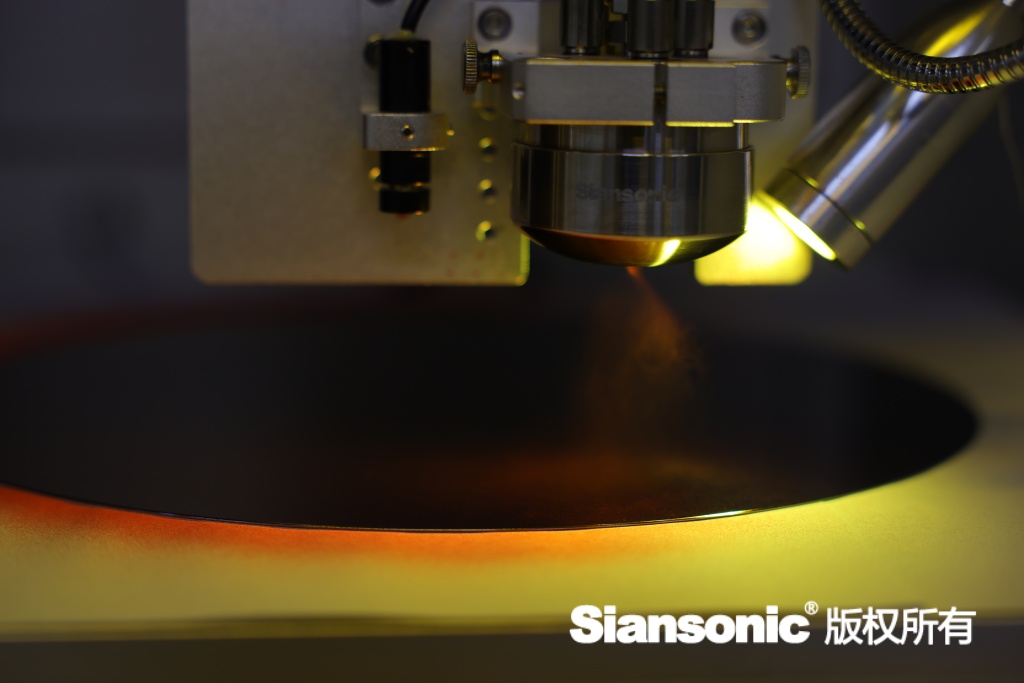
Figure 2.Siansonic conemist ultrasonic nozzle performing photoresist coating on wafers
Application Prospects
Currently, ultrasonic coating technology has gradually achieved large-scale application in nanocoating and thin-film coating operations across multiple industries, including electronics, energy, biomedicine, and aerospace. Its core advantages of low-flow spraying and controllable, uniform atomized particle size make ultrasonic coating technology a reliable technical solution for preparing high-performance nanofilms, providing important support for the industrial application of nanomaterials.


